
Preservative-free glaucoma drops aren’t automatically better at lowering eye pressure. I’d compare the active medication first, then comfort, packaging, and cost. If irritation makes you skip doses, contact your eye doctor rather than stopping treatment.
Both options can control pressure. Preservative-free drops may suit sensitive or dry eyes; preserved drops often cost less and offer more medication choices. Neither is side-effect-free.
Quick Comparison
| What I’d compare | Preservative-free drops | Preserved drops |
|---|---|---|
| Pressure control | Depends on the drug and consistent use | Depends on the drug and consistent use |
| Eye comfort | May reduce preservative-related irritation | May irritate sensitive eyes |
| Packaging and handling | Single-dose vials or special multidose bottles; follow disposal instructions | Usually standard multidose bottles; keep the tip clean |
| Cost and access | May cost more; fewer medication options | Often more generic and insurance-covered options |
| Follow-up | Check pressure, comfort, and dosing technique | Check pressure, comfort, and dosing technique |
My takeaway: <u>choose with your clinician, not by the label alone.</u> Denver’s dry air can worsen discomfort without proving preservative sensitivity. Check your out-of-pocket cost before switching, keep follow-up visits, and seek urgent care for sudden blurred vision or severe eye pain.
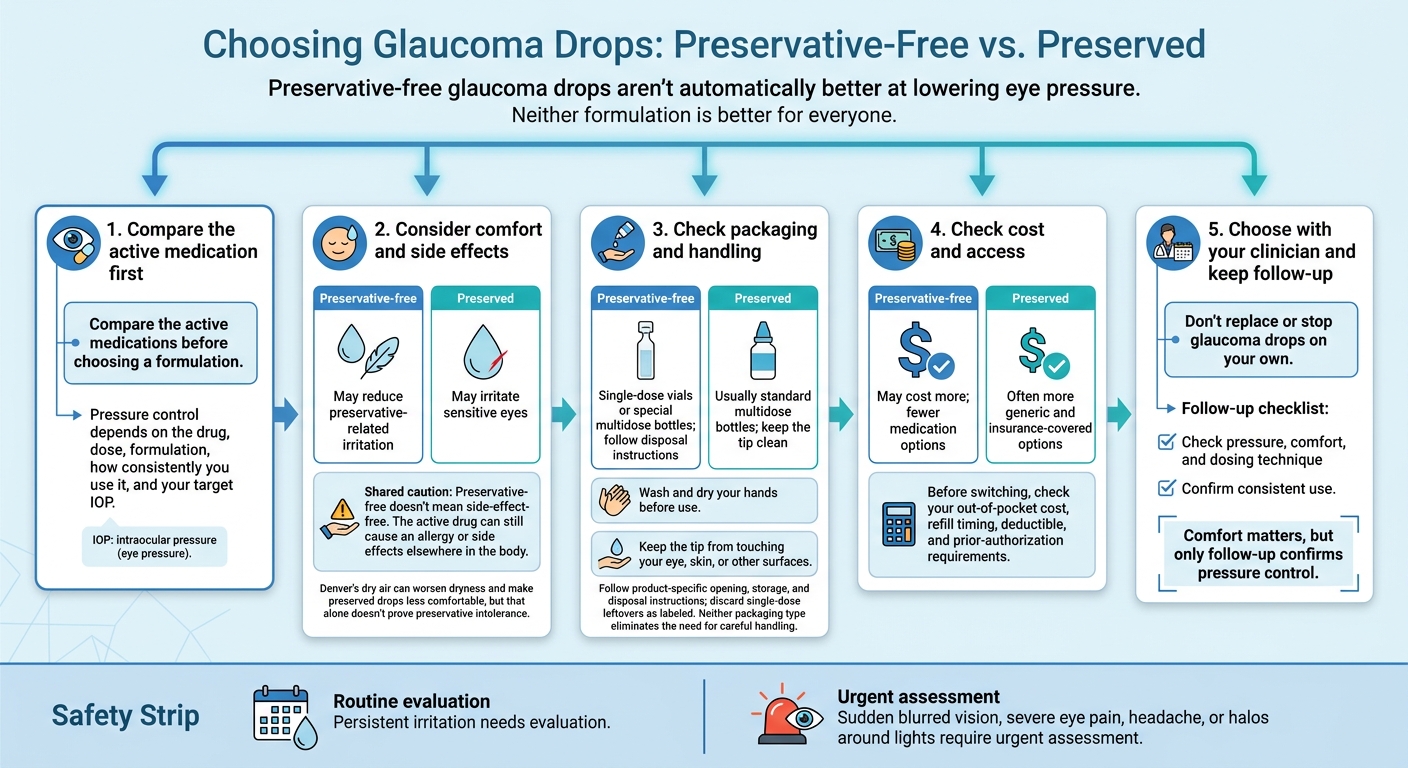
Choosing Glaucoma Drops: Preservative-Free vs. Preserved
Preservatives, Packaging, and Handling
After choosing the active drug, the next practical difference is packaging. Preservatives help limit microbial growth in bottles used more than once. Preservative-free drops come in single-dose units or preservative-free multidose containers.
| Feature | Preserved drops | Preservative-free drops |
|---|---|---|
| Preservative content | Include an antimicrobial preservative, commonly benzalkonium chloride (BAK), or another system such as Purite or SofZia | Contain no antimicrobial preservative |
| Packaging | Usually come in multidose bottles for repeated use | Come in single-dose units or specialized multidose containers |
| Contamination prevention | Preservatives help limit microbial growth but don’t replace careful handling | Depend on protective packaging and careful handling. Contamination can still occur if the tip touches a surface or the product is reused. |
| Handling | Follow the label’s opening, storage, and disposal instructions | Follow product-specific instructions; discard single-dose leftovers |
Wash and dry your hands before use. Keep the tip from touching your eye, skin, or other surfaces. Never transfer the contents to another container.
Packaging also brings up a label detail worth checking: what preservative-free means.
What Preservative-Free Drops Contain
Preservative-free means the product contains no antimicrobial preservative. Check the exact label – the same drug may come in both preserved and preservative-free versions.
Use single-dose products exactly as labeled, and discard any solution left after opening.
Preserved drops, meanwhile, don’t all use the same preservative system.
BAK and Other Preservatives
BAK is the most common preservative. Products with alternatives such as Purite and SofZia are still preserved formulas, though some eyes tolerate them better.
sbb-itb-929a4e2
Eye Pressure Control and Side Effects
Once you’ve checked the packaging, look at whether the active drug can meet your eye pressure target and how well you tolerate it.
Glaucoma drops lower intraocular pressure (IOP) by reducing fluid production or helping fluid drain from the eye.
Compare Active Medications First
Compare the active medications before choosing a formulation. Pressure control depends on the drug, dose, formulation, how consistently you use it, and your target IOP. Drug classes differ in how much they lower pressure and which side effects they may cause.
Drug Side Effects vs. Preservative Irritation
Preservative-free doesn’t mean side-effect-free. The active drug can still cause an allergy or side effects elsewhere in the body. If symptoms persist after switching drops, the cause may be the medication, the formulation, or another eye condition.
When formulations provide similar pressure control, comfort and ease of daily use help guide the choice.
Comfort, Daily Use, and Cost
When pressure control is similar, the best formulation is one you can use comfortably, consistently, and affordably. Once the active drug is chosen, these practical differences often determine whether treatment works long term.
| Factor | Preservative-free drops | Preserved drops |
|---|---|---|
| Eye-surface effects | May reduce irritation and eye-surface changes linked to preservatives. | May cause or worsen burning, dryness, redness, tearing, or eyelid irritation in susceptible eyes. |
| Handling | Single-dose vials or special multidose containers can be less convenient for travel or for people with limited dexterity or vision. | Standard multidose bottles are usually easier for daily dosing and travel, but bottle tips must stay clean. |
| Cost | May have higher retail prices, fewer generic options, or prior-authorization requirements. | Often more accessible through formularies and lower-cost generics. |
| Insurance access | Coverage depends on the plan and product; check your out-of-pocket cost before switching. | Frequently covered, though formulary restrictions and copays vary. |
| Medication availability | Not every active glaucoma medication has a preservative-free version in the U.S. | Generally available in more strengths and with more active ingredients. |
| Total preservative exposure | Avoids preservatives from that product; this may help more when you use several daily drops. | Exposure increases with the number of preserved products and daily doses. |
When Preservative-Free Drops May Help
Preservative-free drops may help when dry eye, ocular-surface disease, suspected preservative sensitivity, or several preserved drops make it hard to stick with treatment. Less burning or redness can make daily dosing easier, but relief isn’t guaranteed.
Feeling better doesn’t, by itself, mean the medication is right for you. If irritation improves, confirm that pressure control and consistent use remain stable.
When Preserved Drops May Be Suitable
Preserved drops are a suitable choice when they control pressure, feel comfortable, and cost less – or when a preservative-free version isn’t available.
Report persistent stinging, tearing, grittiness, or eyelid irritation. Brief stinging alone doesn’t prove preservative toxicity. An exam may show surface staining, redness, follicles, or eyelid eczema. Track which symptoms last and when they occur; persistent symptoms call for an eye-surface review and pressure check.
Handling Drops and Checking Coverage
Ask for a demonstration if arthritis, tremor, or poor vision makes dosing difficult. Wash your hands, keep the bottle tip away from your eye and skin, and discard single-use vials after use unless the labeling says otherwise.
Before switching, check your out-of-pocket cost, refill timing, deductible, and prior-authorization requirements.
How Denver’s Dry Climate Can Affect Eye Comfort
Denver’s dry air can worsen dryness and make preserved drops less comfortable, but that alone doesn’t prove preservative intolerance. At Denver Eye Surgeons, review your symptom patterns alongside your medication list and eye-surface exam. With either formulation, follow-up should check pressure control, comfort, consistent use, and handling technique.
Choosing a Formulation and Planning Follow-Up
Once you and your doctor narrow down the drug choice, choose a formulation that fits your eye surface, dosing routine, and follow-up plan.
Review Pressure, Symptoms, and Treatment Access
Your doctor reviews your glaucoma diagnosis, target intraocular pressure (IOP), current pressure readings, and eye surface. They also check for barriers that could make it hard to follow your treatment plan.
Some symptoms need routine follow-up; others need urgent care. Persistent irritation needs evaluation. Sudden blurred vision, severe eye pain, headache, or halos around lights require urgent assessment.
Recheck Pressure and Comfort After Switching
If your pressure is controlled but the drops are hard to tolerate, your clinician may switch formulations. Don’t replace or stop glaucoma drops on your own. Confirm any change in medication or dosing with your prescriber.
At follow-up, your doctor should recheck your IOP, how you use the drops, and how your eye surface responds. If pressure stays above target, you may need another drug, combination therapy, selective laser trabeculoplasty (SLT), or surgery.
Your eyes may feel better before pressure stabilizes, so keep your follow-up visit. Preserved drops may still be suitable if you tolerate them, while preservative-free drops may reduce surface irritation. Regular checks of pressure, comfort, and how closely you follow the dosing plan help determine which formulation fits you best.
Conclusion: Balance Pressure Control and Comfort
Neither formulation is better for everyone. Preservative-free drops may feel more comfortable for sensitive eyes, while preserved drops work well for many patients.
Choose the formulation that meets your target eye pressure and fits your daily routine. Before switching, make sure you can use it correctly and consistently. Plan any changes with your clinician, and keep regular follow-up appointments. Comfort matters, but only follow-up confirms pressure control.
FAQs
How soon might irritation improve after switching drops?
The available information doesn’t say how soon eye irritation may improve after switching from preserved to preservative-free glaucoma drops. If you have discomfort or irritation, contact Denver Eye Surgeons to discuss your symptoms and treatment plan.
Can I use artificial tears with glaucoma drops?
Yes – artificial tears can generally be used with glaucoma drops to help ease dryness, burning, stinging, or blurry vision. If you use artificial tears often, preservative-free options may help limit added irritation.
Keep using your prescribed pressure-lowering glaucoma drops as directed. Ask your eye doctor whether you should space out the two types of drops.
How soon should I have my pressure checked after switching?
After switching glaucoma medications, follow the schedule your eye care professional provides. Your doctor will decide when to check your eye pressure to see whether the new medication is working.
Routine glaucoma follow-up visits typically take place every 6 to 12 months, or as directed by your specialist at Denver Eye Surgeons. After a medication switch, your follow-up schedule will be tailored to your needs.