
Choosing how to correct your vision – LASIK, glasses, or contacts – has lasting effects on your eyesight, health, and finances. Here’s a quick breakdown:
- LASIK: A one-time surgical procedure that reshapes the cornea for permanent vision correction. Offers high satisfaction (95%+) and long-term savings but may cause temporary side effects like dry eye or halos.
- Glasses: Safe, low-maintenance, and infection-free. However, they can obstruct peripheral vision and accumulate long-term costs due to replacements and updates.
- Contacts: Offer better peripheral vision but require daily upkeep and carry a higher risk of eye infections. Over decades, they can cost significantly more than LASIK.
Quick Takeaway: LASIK provides a permanent solution with lower long-term risks and costs compared to glasses or contacts. However, glasses remain the safest option, while contacts might appeal to those prioritizing convenience over time.
| Metric | LASIK | Contacts | Glasses |
|---|---|---|---|
| Satisfaction (3 Years) | 77–88% | 54% | Lower than LASIK |
| Infection Risk | Less than 0.1% | 1 in 500 annually | None |
| Lifetime Cost (20 Years) | ~$4,200 upfront | $10,000–$14,000 | $4,000–$12,000 |
Bottom Line: LASIK is ideal for those seeking long-term clarity and convenience, while glasses are the safest and most straightforward option. Contacts, while effective, come with higher risks and costs over time.
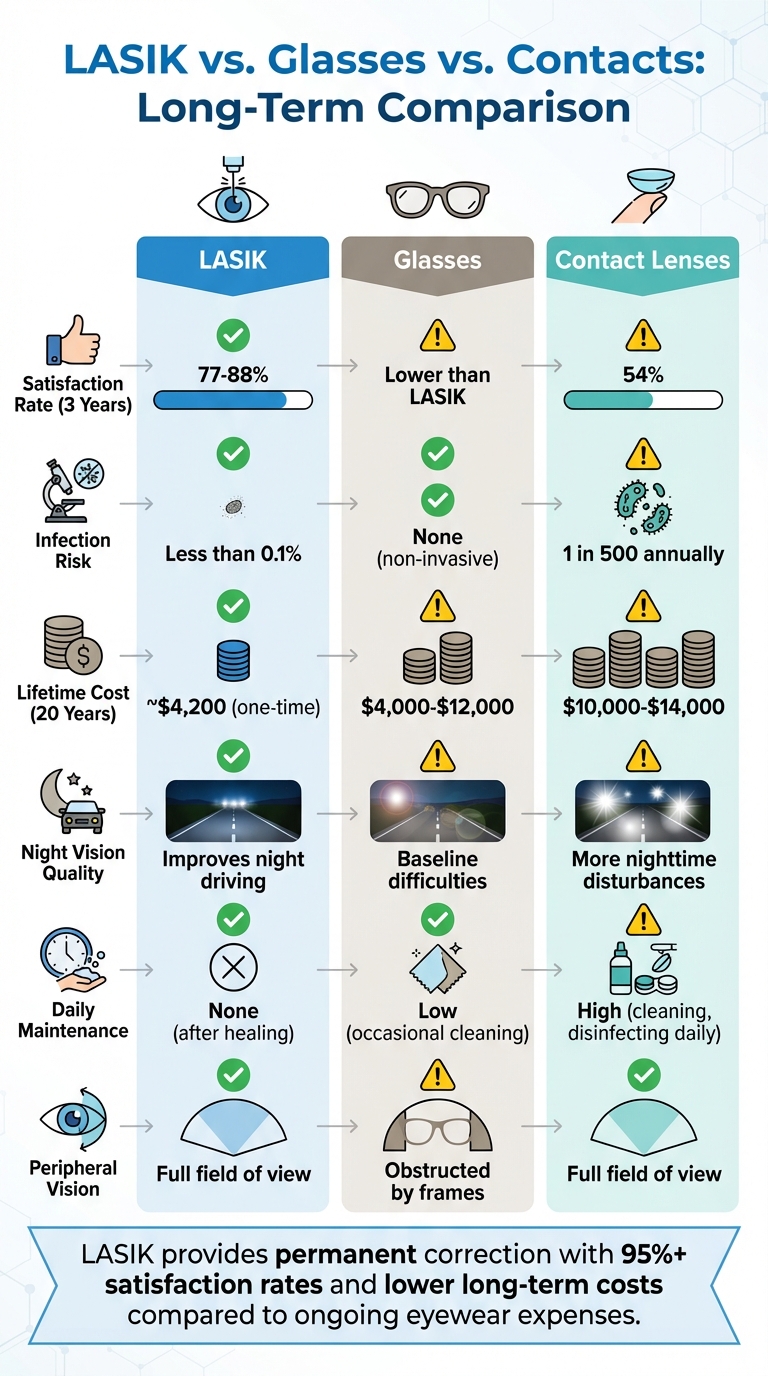
LASIK vs Glasses vs Contacts: Long-Term Comparison Chart
LASIK Long-Term Results
How LASIK Results Hold Up Over Time
LASIK is known for its long-lasting and reliable outcomes. In a five-year study, 96% of patients said they would choose to undergo the procedure again, with the same percentage expressing satisfaction with their vision quality. Vision changes over time are usually minimal – research shows that five years after surgery, 60% of eyes remain within ±0.5 diopters of their target correction, and 83% stay within ±1.0 diopters. These minor variations are often smaller than the natural changes in vision that many people experience. However, those with severe myopia (greater than –6.0 diopters) may experience some regression, averaging about –1.06 diopters over five years. By contrast, individuals with mild myopia typically see their vision stabilize within the first year after surgery.
"LASIK surgery offers predictable results in terms of refractive and visual outcome with mild regression in refraction over time."
– M O’Doherty, Researcher, National University of Ireland Dublin
At Denver Eye Surgeons, patients frequently report high levels of satisfaction with their results. Janet Grefath shared, "I had PRK done years ago but had LASIK done on my distance eye. It was the best decision I’ve made." Similarly, Amy Thomas remarked, "I love my corrected vision and I healed wonderfully!". These testimonials reflect broader trends, with studies showing that 88% of former contact lens users report being "strongly satisfied" with their LASIK results three years after the procedure.
While LASIK outcomes are generally stable, patients are encouraged to remain vigilant about potential complications.
Possible Long-Term Complications
One common side effect is dry eye, which affects around 30% of patients. Symptoms typically peak about three months after surgery and tend to stabilize within a year. Interestingly, studies suggest that LASIK does not significantly increase the risk of dry eye compared to what is commonly seen in contact lens users.
Halos and glare, particularly noticeable at night, can also occur. About 40% of patients who had no preoperative halos report experiencing them three months after LASIK. However, the FDA’s PROWL studies found that fewer than 1% of patients reported that these visual symptoms caused "a lot of difficulty" or prevented them from performing daily activities. Overall, more than 95% of LASIK patients expressed satisfaction with their vision post-surgery.
Regular eye exams are crucial for maintaining eye health after LASIK. While complications are rare and often manageable, monitoring is key. Rebecca Schnur described her recovery process, saying, "I was nervous that the procedure hadn’t ‘worked,’ but everyone at Denver Eye Surgeons kept telling me it would be fine – and it was!".
Glasses and Contact Lenses: Long-Term Performance
Vision Quality with Glasses Over Time
Glasses are a reliable and low-risk choice for correcting vision. They provide steady optical correction year after year, with no medical risks since they rest outside the eye. This eliminates concerns like infections or corneal damage.
"Eyeglasses are the simplest and safest means of refractive error correction." – CADTH
That said, glasses aren’t without their drawbacks. They can obstruct peripheral vision due to their frames and are prone to issues like fogging, smudges, or water spots, especially in humid or rainy conditions. These inconveniences often lead people to explore alternatives like contact lenses or even surgical procedures, both of which come with their own sets of pros and cons.
Long-Term Contact Lens Use
While glasses provide a consistent solution, contact lenses introduce unique challenges over time. A three-year study revealed that satisfaction with vision among contact lens users declined from 63% at the start to 54% after three years. On the other hand, satisfaction rates were significantly higher among those who switched from contact lenses to LASIK.
Contact lens users also report more nighttime visual disturbances, such as glare and difficulty driving at night, compared to individuals who have undergone modern refractive surgeries. Many abandon contact lenses for glasses due to discomfort or issues like dry eye. Beyond comfort, contact lenses carry greater long-term health risks, including higher rates of eye infections, corneal ulcers, and abrasions. Studies show that LASIK can significantly reduce these complications compared to continued contact lens use.
These findings highlight the importance of weighing long-term outcomes when deciding on a vision correction method. Regular eye exams remain crucial, and both glasses and contact lenses require ongoing care and maintenance. For many, this maintenance burden leads to considering permanent solutions like refractive surgery.
LASIK vs. Glasses vs. Contacts: Side-by-Side Comparison
Comparison Table: Performance Metrics
When comparing LASIK, glasses, and contact lenses, the long-term performance of each method reveals some interesting differences. Research highlights how satisfaction, night vision, and other factors vary depending on the corrective option.
Satisfaction levels tell a strong story. Studies indicate that people who undergo LASIK tend to report higher satisfaction rates compared to those who stick with glasses or contacts. For example, satisfaction among contact lens users dropped from 63% to 54% over a three-year period, while dissatisfaction with LASIK remained minimal – hovering between just 1% and 4% over time.
Night vision quality is another area where LASIK stands out. Many LASIK patients report improved night driving compared to their experiences with glasses or contacts. On the flip side, contact lens wearers often experience more nighttime disturbances, and glasses offer only modest performance in low-light conditions.
| Metric | LASIK | Contact Lenses | Glasses |
|---|---|---|---|
| Strong Satisfaction (3-Year) | 77%–88% | 54% | Lower than LASIK |
| Night Driving Ease | Improves night driving | More nighttime disturbances | Baseline difficulties reported |
| Visual Clarity (Bright Light) | Often better than habitual Rx | Typical correction | Typical correction |
| Infection Risk | Lower than contacts | Higher risk | Lowest (non-invasive) |
| Daily Maintenance | No maintenance post-healing | High (cleaning, disinfecting) | Low (cleaning smudges) |
"Compared with contact lens wear, current LASIK technology improved ease of night driving, did not significantly increase dry eye symptoms, and resulted in higher levels of satisfaction at 1, 2, and 3 years follow-up." – PubMed Abstract, Three-Year Longitudinal Survey
That said, LASIK isn’t without its challenges. About 43%–46% of LASIK patients report new visual symptoms, like glare or halos, within the first three months following the procedure. However, these issues don’t seem to outweigh the overall satisfaction most people experience.
One clear advantage of LASIK is the reduced risk of infections. Unlike contact lenses, which come with a higher likelihood of eye infections, ulcers, and abrasions, LASIK significantly lowers these risks over time. Glasses, being non-invasive, naturally have the lowest infection risk of the three options.
This comparison sheds light on the varying levels of convenience, safety, and satisfaction, setting the stage for a deeper look into the long-term costs and risks associated with each method.
Infection Risks and Eye Health
Infection Rates: LASIK vs. Contact Lenses
The risk of infection varies greatly between LASIK surgery and contact lens use. For LASIK patients, the occurrence of infectious keratitis is extremely low, affecting fewer than 0.1% of individuals. When infections do happen, they are often caused by gram-positive bacteria like Staphylococcus species or atypical mycobacteria, which may enter through the corneal flap created during the procedure.
On the other hand, contact lens users face a much higher risk. The rate of corneal ulceration among lens wearers is 122 cases per 100,000 person-years. The risk increases significantly with extended wear soft lenses, which show an incidence of 20.9 cases per 10,000 person-years, compared to 4.1 for daily wear soft lenses. Overall, contact lens wearers are 8.6 times more likely to develop a corneal ulcer compared to non-wearers.
"Education about proper lens care and wearing schedules is obviously key to minimizing the risk of microbial keratitis." – Dr. Brien Jeng, Assistant Professor of Ophthalmology, Cleveland Clinic
The higher risk with contact lenses comes down to daily exposure. Lenses sit directly on the cornea, creating an opportunity for contamination, particularly when hygiene practices are inadequate. Alarmingly, 46% to 57% of contact lens users fail to follow proper lens care guidelines. In comparison, LASIK involves a single surgical event with a short recovery period, after which the chance of infection drops significantly.
While both LASIK and contact lenses carry some level of risk, glasses provide a far safer alternative.
Eye Health with Glasses
Glasses offer a clear advantage when it comes to infection prevention. Since they don’t touch the eye, require no surgical intervention, and leave the cornea’s natural defenses intact, they pose virtually no risk of infection.
"Eyeglasses are the simplest and safest means of refractive error correction." – Canadian Agency for Drugs and Technologies in Health
For those concerned about infection-related complications, glasses remain the safest and most reliable option. They provide effective vision correction without compromising eye health.
sbb-itb-929a4e2
Long-Term Costs of Vision Correction
Lifetime Costs of Glasses and Contacts
When looking at long-term vision correction, the financial side of things is just as important as the health benefits. Glasses and contact lenses come with ongoing expenses that can really add up over time. For contact lens users, the yearly cost typically falls between $250 and $750 for the lenses themselves, plus an additional $220 annually for cleaning supplies. Over two decades, this means spending anywhere from $10,000 to $14,000, and for those using contacts for 40 years, the total could climb to $30,000 or more.
Glasses aren’t exactly a bargain either. A single pair of prescription glasses, including frames and lenses, costs between $200 and $600, while designer frames can easily exceed $1,000. Over a 20-year span, the total cost for glasses, including replacements and upgrades, typically ranges from $4,000 to $12,000.
"One pair of $200 glasses a year over 20 years is $4,000, about the same price as LASIK surgery." – Will Vision & Laser Centers
In comparison, LASIK offers a one-time expense that can lead to significant savings over the years.
LASIK Cost Analysis
LASIK stands out as a cost-efficient, one-time investment. The procedure generally costs around