
Diabetic eye disease can cause vision loss without warning, but early detection and treatment can prevent or even reverse damage.
Erik and Alex, both living with diabetes, experienced severe vision issues due to diabetic retinopathy – a condition caused by damage to the retina’s blood vessels. Erik regained 20/20 vision after surgery, while Alex restored much of his sight through anti-VEGF injections, laser therapy, and lifestyle changes. Their stories highlight the importance of:
- Annual dilated eye exams to catch silent damage early.
- Blood sugar management to prevent complications.
- Quick action if symptoms like floaters, flashes, or blurriness occur.
With nearly 34 million Americans living with diabetes, proactive eye care can protect vision and maintain independence. Don’t wait for symptoms – schedule your eye exam today.
The Patient Perspective: Diabetes-related Eye Disease
sbb-itb-929a4e2
How Diabetes Affects Your Vision
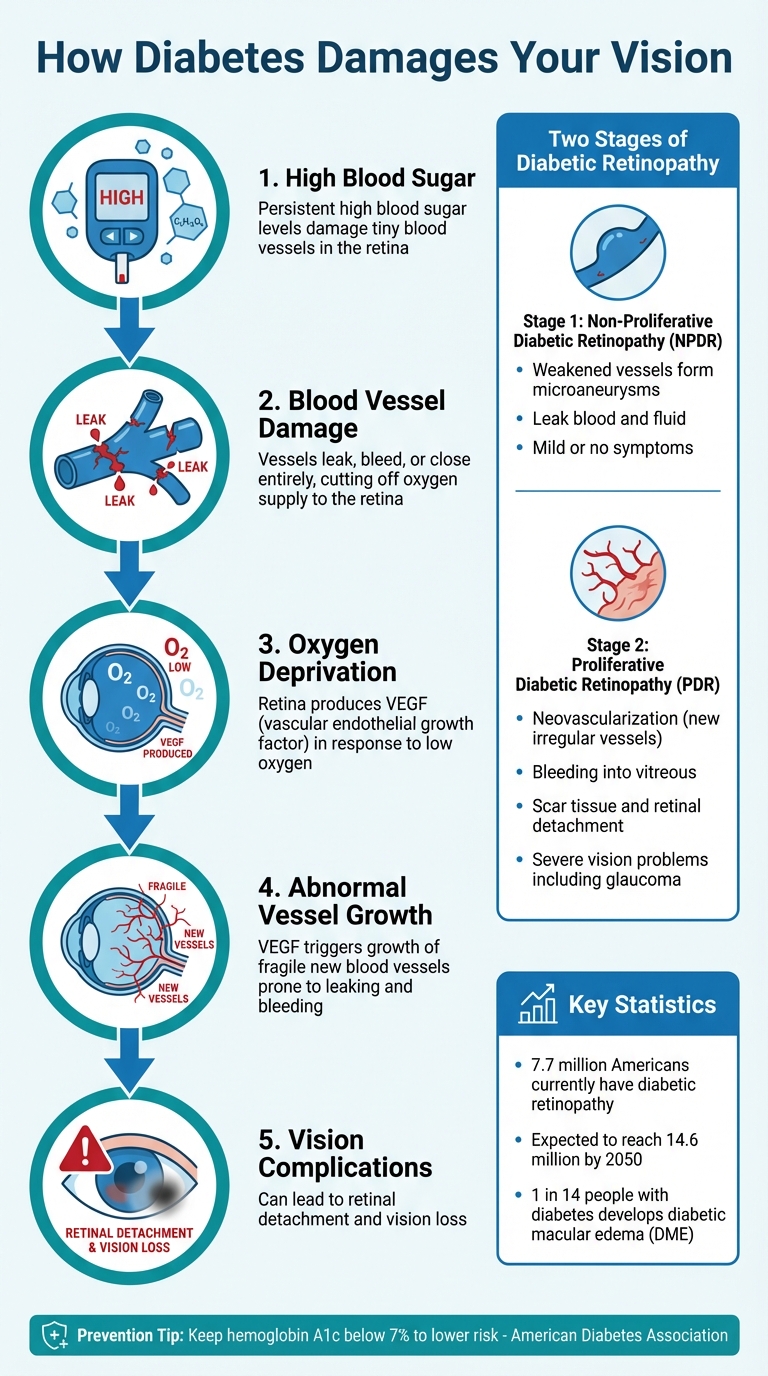
How Diabetes Damages Vision: From High Blood Sugar to Retinopathy
High blood sugar levels, when persistent, can harm the tiny blood vessels in your retina that supply oxygen and nutrients. These damaged vessels may start to leak, bleed, or even close entirely, cutting off the retina’s oxygen supply. As Leo Kim, MD, PhD, a Retina Surgeon at Harvard Health, explains, "The ability of the retina to sense light requires energy, which is dependent on the oxygen supplied by blood circulating through blood vessels".
When oxygen levels drop, the retina responds by producing a substance called vascular endothelial growth factor (VEGF). This process leads to the growth of fragile new blood vessels that are prone to leaking and bleeding, potentially causing retinal detachment. Currently, 7.7 million Americans are living with diabetic retinopathy, and that number is expected to nearly double to 14.6 million by 2050.
This chain reaction of damage often results in diabetic retinopathy, one of the leading causes of vision loss.
Diabetic Retinopathy: A Leading Cause of Vision Loss
Diabetic retinopathy develops in two stages. The initial stage, known as non-proliferative diabetic retinopathy (NPDR), involves weakened blood vessels that form tiny bulges called microaneurysms, which can leak blood and fluid. At this stage, symptoms may be mild, such as slight blurriness or trouble reading, though many people experience no symptoms at all.
As the condition progresses to proliferative diabetic retinopathy (PDR), the body attempts to compensate for damaged vessels by creating new, irregular ones – a process called neovascularization. Unfortunately, these vessels are fragile and prone to bleeding into the vitreous, leading to scar tissue, retinal detachment, and severe vision problems, including glaucoma.
Additionally, about one in 14 people with diabetes develops diabetic macular edema (DME). This condition occurs when fluid leaks into the macula – the part of the retina responsible for sharp, detailed vision – causing it to swell. To lower the risk of these complications, the American Diabetes Association advises keeping hemoglobin A1c levels below 7%.
Warning Signs of Vision Loss
One of the challenges of diabetic retinopathy is its silent onset. In its early stages, the condition often causes no noticeable symptoms, even as damage progresses. Recognizing the warning signs is crucial for early intervention. As the disease advances, you may start to notice floaters – dark spots, strings, or translucent shapes drifting across your vision. Other symptoms include blurred or distorted vision, difficulty distinguishing colors (which may appear faded or yellowed), and straight lines that seem bent or wavy – an indicator of macular edema.
If you experience a sudden increase in floaters, flashes of light, a shadow or curtain over your vision, or severe eye pain, seek immediate medical attention. These could be signs of retinal detachment, a medical emergency. Even if your vision seems fine, scheduling an annual comprehensive dilated eye exam is essential. Eye specialists can detect subtle changes, such as microaneurysms or retinal hemorrhages, long before symptoms appear. As Cleveland Clinic emphasizes: "Early diagnosis and treatment are crucial to protecting and preserving your eyesight". Early detection and timely treatment can make all the difference in safeguarding your vision.
Alex’s Story: From Diagnosis to Recovery
Early Symptoms and Seeking Help
Alex Martinez, a 52-year-old from Denver, had been managing type 2 diabetes for eight years when he began noticing subtle changes in his vision. At first, it was occasional blurriness while reading. Over time, the blurriness worsened, and he started seeing floaters – those dark, drifting spots that can obscure your sight.
Initially, Alex chalked it up to aging or maybe just overusing his eyes. But when his vision issues began affecting his ability to drive at night safely, he knew it was time to act. He scheduled an appointment at Denver Eye Surgeons, a clinic known for its expertise in diabetic eye diseases, where specialists conducted a thorough eye examination.
The Diagnosis: Diabetic Retinopathy and Macular Edema
During the visit, the specialists found signs of diabetic retinopathy, including hemorrhages and weakened blood vessels in Alex’s eyes. To dig deeper, they used advanced imaging tools like Optical Coherence Tomography (OCT), which revealed swelling and fluid buildup in the center of his retina – key indicators of diabetic macular edema.
Another test, a fluorescein angiogram, involved injecting a dye to highlight blood flow in the retina. The detailed images showed multiple areas where blood vessels were leaking. These diagnostic tools not only confirmed the extent of Alex’s condition but also guided the next steps for treatment.
The team at Denver Eye Surgeons emphasized the importance of early detection: "If caught early, the disease is reversible. In later stages, various types of treatment become necessary and significant vision can be lost". Thankfully, Alex’s condition, while advanced, was caught in time to prevent further vision deterioration and even restore much of his sight.
Treatment and Recovery Plan
Medical Treatments
Once Alex’s diagnosis of diabetic retinopathy and macular edema was confirmed, his recovery plan combined specialized medical treatments with lifestyle adjustments. The process began with anti-VEGF injections, which help reduce retinal swelling and stop the growth of abnormal blood vessels. His progress was carefully tracked by fellowship-trained retinal specialists at Denver Eye Surgeons, who used OCT scans to monitor changes. Additionally, Alex underwent focal laser therapy, a procedure aimed at sealing leaking blood vessels. Alongside these treatments, managing his overall health became a critical part of the plan.
Lifestyle Changes for Better Eye Health
To make the most of his medical treatments, Alex had to overhaul his daily habits. Since uncontrolled blood sugar was a key factor in his condition, he worked closely with his endocrinologist and the Denver Eye Surgeons team to make meaningful lifestyle changes.
Alex started monitoring his blood glucose levels, ensuring they stayed below 250 mg/dl before engaging in physical activity. He also transformed his diet, focusing on foods like omega-3–rich fish, whole grains, and fiber-packed vegetables, while cutting out white bread, sugary drinks, and processed foods. On top of that, he committed to a consistent exercise routine, aiming for at least 150 minutes of activity each week, including swimming and brisk walking. These changes not only supported his eye health but also boosted his overall energy and well-being within just a few months.
Life After Vision Restoration
Maintaining Vision Health
After regaining his sight, Alex made it a priority to maintain his vision health. He now visits his retinal specialists at Denver Eye Surgeons every three months for dilated eye exams. These visits include OCT scans, which help detect any changes in his retina before symptoms develop. Between appointments, Alex actively manages his health by keeping his blood pressure below 130/80 mmHg and his LDL cholesterol under 70 mg/dL to support his retinal health. At work, he follows the 20/20/20 rule – taking a 20-second break every 20 minutes to look at something 20 feet away, easing eye strain.
Restoring his sight has also allowed Alex to reclaim activities he had once abandoned. He’s back to cycling on weekends and enjoys cooking without needing help to read measurements. Tasks like reading insulin syringes accurately and recognizing faces across a room have become part of his daily routine again – seemingly small details that have a big impact on his sense of normalcy. His renewed independence in managing his diabetes has also reduced stress for both him and his family. These practical steps not only protect Alex’s vision but also shape his overall approach to living with diabetes.
A Patient’s Perspective
The habits Alex has adopted have done more than restore his independence – they’ve reshaped how he views life. After his successful treatment, he deeply appreciates the ongoing care that has given him back both his vision and his confidence. He credits Denver Eye Surgeons for their role in his recovery, highlighting their precision and personal touch. The fellowship-trained retinal specialists were able to diagnose his condition early, preventing permanent damage, and their use of advanced diagnostic tools ensured his treatment was customized from the beginning.
What stood out most to Alex was the personal attention he received. The staff took the time to explain every step of the process and answered all his questions with patience and care.
"Our doctors at Denver Eye Surgeons have the knowledge, expertise, and equipment necessary to diagnose and treat diabetic retinopathy."
Alex now urges others not to wait for symptoms to appear. He wishes he had started scheduling annual dilated eye exams earlier, before his blurred vision forced him to seek help. His advice to fellow diabetics is simple: stay proactive. Controlling blood sugar levels isn’t just about avoiding complications – it’s about preserving the vision that allows for an independent and fulfilling life.
Conclusion
Alex’s journey highlights how early detection and timely intervention can turn the tide on diabetic vision loss. Around one-third of people with diabetes face this challenge, but catching it early offers a chance to reverse the condition. Unfortunately, waiting for symptoms often means the damage has already reached a critical stage.
Thanks to early detection, Alex followed a focused treatment plan. His recovery included anti-VEGF injections, laser therapy, and lifestyle changes – keeping his blood sugar, blood pressure, and cholesterol under control while incorporating regular exercise, which provides lasting benefits for up to 24 hours.
At Denver Eye Surgeons, cutting-edge diagnostics and personalized care played a key role in Alex’s recovery. This approach not only addressed his immediate vision concerns but also tackled the underlying vascular issues that endangered his sight.
Alex’s experience serves as an important reminder: diabetic retinopathy often develops without obvious symptoms, but with regular care and the right support, you can safeguard your vision and maintain independence. Make your annual eye exam a priority today.
FAQs
Can diabetic retinopathy be reversed?
Diabetic retinopathy can’t be completely reversed, but addressing it early can slow its progression and help preserve vision. Seeking timely treatment is crucial to prevent additional damage and support long-term eye health.
How often should I get a dilated eye exam if I have diabetes?
If you have diabetes, scheduling a dilated eye exam at least once a year is crucial. These exams can catch early signs of diabetic eye conditions, like diabetic retinopathy, giving you the chance to start treatment early and safeguard your vision.
What symptoms mean I need urgent eye care?
If you suddenly lose vision, notice severe blurriness, or see new floaters or dark spots, it could signal retinal problems. These symptoms become even more concerning if they come with pain or discomfort. It’s essential to seek immediate eye care to safeguard your vision and prevent further complications.