
Every year, eye infections lead to 1 million healthcare visits in the U.S., costing around $175 million. From contaminated products to poor contact lens hygiene, risks are everywhere. The good news? Simple habits like proper handwashing, lens care, and regular eye exams can make a big difference.
Key Takeaways:
- Hand Hygiene: Wash your hands for at least 20 seconds before touching your eyes or lenses.
- Contact Lens Care: Replace solution entirely, avoid water exposure, and never sleep in lenses.
- Eye Makeup Safety: Don’t share products, follow expiration dates, and remove makeup before bed.
- Protective Gear: Use goggles or shields in risky environments to prevent exposure.
- Post-Surgery Care: Follow hygiene guidelines and attend follow-up visits to catch complications early.
By combining these practices with routine eye care, you can significantly lower your risk of infections and safeguard your vision.
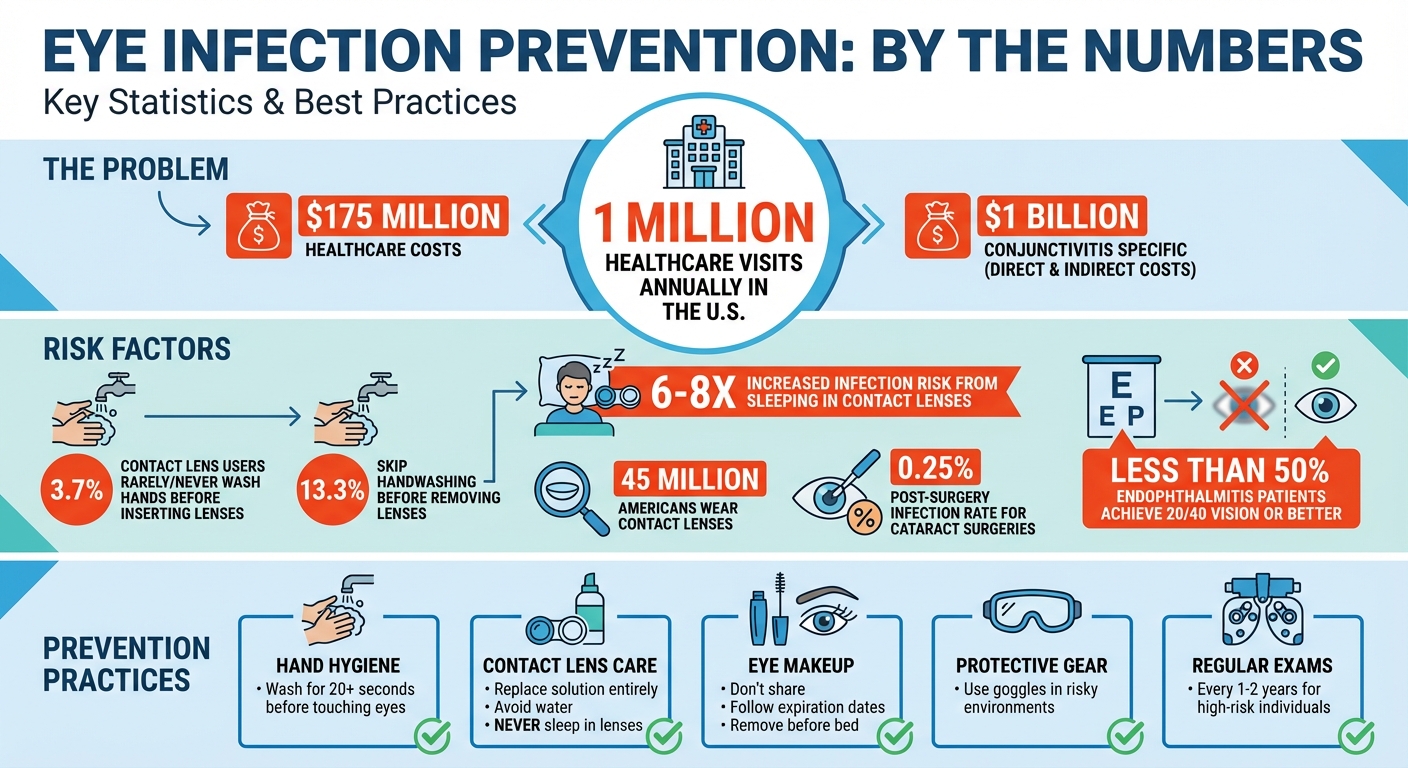
Eye Infection Prevention Statistics and Key Hygiene Practices
Hygiene Practices That Prevent Eye Infections
Handwashing and Avoiding Eye Contact
Washing your hands thoroughly with soap and water for at least 20 seconds is one of the simplest yet most effective ways to protect your eyes from infections. This step is especially important before touching your eyes or handling contact lenses. Interestingly, studies reveal that 3.7% of contact lens users rarely or never wash their hands before putting in their lenses, and 13.3% skip handwashing before taking them out. These habits can open the door to serious conditions like microbial keratitis and conjunctivitis caused by bacteria and viruses.
After washing your hands, make sure to dry them completely with a clean, lint-free cloth. Residual moisture can harbor bacteria, which defeats the purpose of handwashing. If soap and water aren’t an option, use an alcohol-based hand sanitizer with at least 60% alcohol as a reliable alternative.
If you’re caring for someone with an eye infection, take extra precautions. Wash your hands immediately after handling items like linens, applying eye drops, or cleaning discharge to prevent spreading the infection further.
Contact Lens Care
Once you’ve nailed hand hygiene, the next step is proper care for your contact lenses. With 45 million Americans wearing contact lenses, it’s concerning how common improper care practices are. For example, topping off lens solution instead of replacing it entirely reduces its ability to disinfect effectively – a practice best avoided.
The Centers for Disease Control and Prevention (CDC) highlights an important reminder:
Contact lenses are medical devices, and failure to wear, clean, and store them as directed can increase the risk of eye infections, such as microbial keratitis.
Water is another enemy of contact lenses. All water sources, including tap water, can contain harmful pathogens like Acanthamoeba, a parasite known for causing severe and hard-to-treat infections. Additionally, sleeping in your contact lenses increases the risk of infection by 6 to 8 times.
To keep your eyes safe, always follow the "rub and rinse" method when removing your lenses, even if you’re using a "no-rub" solution. Proper storage is equally important. Clean your lens case regularly by rinsing it with fresh solution, store it upside down with the cap off to air dry, and replace the case at least every three months to prevent bacterial buildup.
These habits are essential for maintaining healthy eyes and pair well with safe makeup practices.
Safe Eye Makeup Practices
Eye makeup can be a hidden culprit behind eye infections if not handled carefully. Dr. Nicholas J. Volpe from Northwestern Medicine sheds light on the issue:
Excess debris from makeup can cause eye irritation and redness.
To avoid problems, never share eye makeup or brushes with others, and throw out any products used during an eye infection. Always remove makeup before bed using warm compresses or makeup wipes, and keep an eye on expiration dates – especially for mascara, which can leave behind stubborn residues.
When trying out products in stores, stick to single-use applicators instead of shared brushes. And, of course, wash your hands thoroughly before applying makeup or touching the area around your eyes.
Protective Measures to Reduce Infection Risk
Wearing Protective Eyewear
When it comes to protecting your eyes from infections, physical barriers are just as important as maintaining personal hygiene. The right type of eye protection depends on your surroundings and the potential risks you face.
Indirectly-vented goggles are one of the most effective options for shielding your eyes from splashes, sprays, and respiratory droplets. These goggles fit snugly across your brow and the corners of your eyes, providing a reliable seal. The National Institute for Occupational Safety and Health (NIOSH) explains the risks clearly:
Infectious agents are introduced to the eye either directly (e.g., blood splashes, respiratory droplets generated during coughing or suctioning) or from touching the eyes with contaminated fingers or other objects.
For optimal protection, choose indirectly-vented or non-vented goggles, as they block liquid penetration more effectively than directly-vented goggles. In situations where heavy splashes are likely, face shields with full wrap-around coverage are a smart choice. These should extend to your ears and provide protection for your chin and crown, ensuring fluids can’t reach your eyes from any angle. Keep in mind that standard prescription glasses and contact lenses do not qualify as protective equipment and won’t safeguard against infectious agents.
If you’re using reusable eye protection, handle it carefully. Always remove goggles or shields by their straps or temples – avoid touching the front or sides, as these areas are most likely contaminated. Clean them with a proper disinfectant, rinse thoroughly, and allow them to air dry while wearing gloves. These steps are critical to maintaining your defense against eye infections.
While personal protective gear is essential, addressing environmental risks is equally important.
Managing Environmental Risk Factors
In addition to personal equipment, controlling environmental factors can further reduce the risk of infection. Hazards like dust, wind, and airborne particles can scratch the surface of your eyes, creating openings for germs to enter. Everyday activities, such as swimming or showering, can also expose your eyes to waterborne pathogens, especially if you wear contact lenses.
In dusty workplaces, engineering controls can help lower exposure, reducing the need to rely solely on personal protective equipment. At home, disinfect high-touch surfaces regularly with appropriate cleaning agents. For example, germs like adenoviruses, which are highly contagious and can cause pink eye, require a bleach-based solution containing 2,000–5,000 ppm chlorine (about 10 to 25 tablespoons of bleach per gallon of water) for effective disinfection. It’s worth noting that 70% isopropyl alcohol is ineffective against adenoviruses.
For those who wear contact lenses, it’s critical to take precautions. Remove your lenses before swimming or showering to avoid exposing your eyes to harmful microorganisms in water. Combining these environmental measures with proper hygiene practices ensures a more comprehensive approach to eye protection.
Preventing Infections After Eye Surgery
Why Follow-Up Care Matters
After undergoing eye surgery, follow-up visits are crucial. These appointments help catch and treat potential complications early, including postoperative endophthalmitis – a serious internal eye infection. If left untreated, this condition often leads to poor visual outcomes. In fact, less than 50% of patients with this infection achieve a final visual acuity of 20/40 or better.
Postoperative endophthalmitis typically develops within one to two weeks after surgery and occurs in about 0.25% of cataract surgeries. However, the risk can double or even triple if surgical complications, such as posterior capsular rupture, occur. Saad Althiabi and colleagues underline the importance of timely follow-up care:
Early follow-up after cataract surgery is highly recommended to detect any sign of endophthalmitis so as to treat it immediately and ensure patient compliance on post-surgery medication and precautions.
These follow-ups allow your surgeon to check for signs of infection, monitor intraocular pressure, and assess wound healing. They also ensure you’re using medications correctly. Research shows that even a single day’s delay in starting prescribed antibiotics can increase the risk of infection. Alongside these evaluations, maintaining strict hygiene practices is essential for a smooth recovery.
Post-Surgery Hygiene Guidelines
Proper hygiene plays a key role in preventing infections after eye surgery. Start by washing your hands thoroughly for at least 20 seconds with soap and water before and after applying eye drops or cleaning the area around your eye. If soap and water aren’t available, use a hand sanitizer containing at least 60% alcohol.
Avoid rubbing your eyes during recovery, as this can introduce bacteria to the surgical site. Ophthalmic Surgeon Kamran Saha advises:
While it may be tempting to rub your eyes after cataract surgery, this can affect your healing and lead to an increased risk of infection.
If you notice any discharge, use a clean cotton ball dampened with cooled, boiled water to gently wipe it away. Always wipe from the inner corner of your eye outward and discard the cotton ball immediately. Additionally, wash pillowcases, sheets, and towels regularly in hot water with detergent, and clean your hands after handling dirty laundry.
To protect your eyes further, wear a protective shield while sleeping for at least one week to avoid accidental rubbing. Avoid using eye makeup for four weeks, as it can harbor bacteria. Stick to these activity guidelines to minimize infection risks:
| Activity | Wait Time | Reason |
|---|---|---|
| Showering | 24 hours | Prevent water or soap from entering the incision |
| Strenuous exercise | 2–4 weeks | Avoid spikes in eye pressure |
| Eye makeup | 4 weeks | Reduce bacterial contamination |
| Swimming/saunas | 4–6 weeks | Avoid waterborne infections |
If you experience symptoms such as vision loss, severe pain, redness, flashes, floaters, or nausea, contact your eye doctor immediately. These could be signs of an infection that requires urgent attention.
sbb-itb-929a4e2
The Role of Regular Eye Care in Prevention
How Denver Eye Surgeons Helps Prevent Infections

Regular dilated eye exams are a key tool in spotting the early signs of infections. By widening the pupils, these exams allow doctors to check for inflammation, blocked glands, and other underlying issues that might increase your risk of eye infections. During these appointments, healthcare providers take a detailed medical history, perform thorough examinations, and may even swab eye discharge for lab testing to identify whether the infection is bacterial, viral, or fungal. As the Cleveland Clinic points out:
It’s important to see a healthcare provider to determine the exact cause and find the correct treatment.
This precise approach ensures you’re prescribed the right medication – whether it’s antibiotic, antiviral, or antifungal drops – avoiding the risks of self-diagnosing with over-the-counter remedies.
Denver Eye Surgeons, based in Denver, Colorado, offers a wide range of eye care services, including specialized retina care, diabetic eye care, and treatments for various eye conditions. Their same-day appointments help address potential infections quickly. They also keep an eye on systemic health issues like diabetes and high blood pressure during routine exams, as these conditions can impact eye health and increase the likelihood of infections.
Every year, about 1 million people in the U.S. seek medical care for eye infections, with conjunctivitis alone racking up an estimated $1 billion in direct and indirect costs annually. Many of these cases could be avoided or caught earlier through regular eye care. These visits also provide education on essential practices like proper contact lens hygiene, daily eyelid cleaning, and the dangers of sharing cosmetics. By staying proactive, routine exams pave the way for timely treatment when symptoms first appear.
When to See an Eye Doctor
While regular checkups are vital for prevention, knowing when to seek immediate care is just as important. Don’t wait to get medical attention if you experience symptoms such as decreased vision, severe eye pain, unusual drainage, redness, or sensitivity to light. These could signal serious conditions like bacterial keratitis or endophthalmitis, which require urgent care to prevent lasting damage to your vision.
For routine care, it’s recommended to have a comprehensive dilated eye exam every 1 to 2 years if you’re over 60, African American and over 40, or have a family history of glaucoma. If you have diabetes or high blood pressure, talk to your doctor about scheduling a dilated eye exam every year. For contact lens wearers, stop wearing your lenses immediately and consult an eye care provider if you notice redness, discomfort, or blurry vision.
Pay close attention to warning signs that demand immediate evaluation by a professional, such as flashes of light, a sudden increase in floaters, a shadow in your vision, bulging of the eye, or swelling that extends to the cheek or forehead. As the CDC explains:
The eye exam can tell you and your doctor if there are any underlying health conditions that need attention.
Scheduling regular exams and acting quickly when symptoms arise go hand in hand. Denver Eye Surgeons even offers on-call services after hours and on weekends to handle urgent, vision-threatening infections. By staying vigilant, you can protect your eyes and your overall health.
Prevent & Treat Eye Infections: Expert Tips! (2024)
Conclusion
Keeping your eyes healthy and infection-free starts with good hygiene and proper care. Begin by washing your hands thoroughly with soap and water for at least 20 seconds before touching your eyes – this simple step is crucial. If you wear contact lenses, follow essential practices like using the "rub and rinse" method with fresh disinfecting solution, replacing your lens case every three months, storing cases upside down with the caps off to air dry, avoiding water exposure while wearing lenses, and never sharing personal items like makeup, towels, or pillows. If you notice symptoms like light sensitivity, burning, or unusual discharge, remove your lenses immediately and consult an eye care professional. These practices are just as important during recovery from eye surgery.
After surgery, take extra precautions to avoid contamination. For instance, ensure that eye drop bottles or ointment tubes don’t touch your eye or any surface. If you experience increased redness, pain, or crusty discharge near your lash line, seek medical attention promptly. If you’re using steroid drops for more than 10 days, have your doctor monitor your eye pressure closely.
In addition to daily hygiene and post-surgery care, regular check-ups are key to maintaining long-term eye health. High-risk individuals should aim for dilated eye exams every 1–2 years to catch early signs of inflammation and receive personalized eye care advice. As the CDC wisely points out:
Your habits, supplies, and eye care provider are all essential for maintaining healthy eyes.
FAQs
What are the most common contact lens care mistakes that can lead to eye infections?
The most common mistakes in contact lens care that can lead to eye infections include sleeping with your lenses in, wearing them beyond their recommended timeframe, and skipping proper cleaning routines. Poor hygiene – like failing to disinfect lenses properly or using outdated or contaminated solutions – can greatly raise the risk of infections such as Acanthamoeba keratitis.
Everyday activities like swimming or showering with your lenses on, as well as not replacing your lens case regularly, can expose your eyes to harmful germs. These habits compromise your eye’s natural defenses, leaving it more susceptible to bacterial, fungal, or protozoan infections, which can cause serious complications.
To protect your eyes, always follow the instructions from your eye care provider, stick to the recommended lens replacement schedule, and maintain good hygiene when handling your lenses.
How can I keep my eye makeup routine safe and hygienic?
To ensure your eye makeup routine is safe and hygienic, here are some key tips to keep in mind:
- Keep it clean: Regularly clean your makeup products and applicators to stop bacteria or fungi from taking hold. For mascara, it’s best to toss it after three months to avoid potential infections.
- No sharing allowed: Sharing makeup or using store testers might seem harmless, but it can easily spread germs. Stick to your own products.
- Wash up first: Always wash your hands before applying makeup, and avoid reusing applicators that have been in contact with your eyes.
- Contact lens care matters: If you wear contacts, make sure to clean and store them properly to minimize the risk of eye infections.
By sticking to these practices, you can keep your eyes healthy while rocking your favorite makeup looks.
What should I do if I think I have an eye infection after surgery?
If you suspect you might have an eye infection following surgery, don’t wait – reach out to your ophthalmologist immediately. Certain infections, like endophthalmitis, are serious and can result in vision loss if not addressed quickly.
Be alert for signs such as redness, swelling, pain, blurred vision, or discharge. Acting promptly and seeking professional care can safeguard your vision and support a smooth recovery.