
Fewer eye injections don’t always mean fewer appointments. When I compare monthly anti-VEGF treatment with PRN (as-needed) care, the main difference is scheduled injections versus injections guided by exam findings – not whether follow-up matters.
- Monthly: Injections about every 4 weeks help control active disease.
- PRN: Scheduled exams continue, but you may leave without an injection.
- Either plan: Retinal exams, OCT scans, treatment response, and your ability to attend visits guide care – not symptoms alone.
<u>My takeaway:</u> Ask your ophthalmologist what would trigger another injection and when your next exam is due. PRN may reduce injections and their risks, but travel, monitoring, and costs still matter. Results in diabetic macular edema don’t automatically apply to proliferative diabetic retinopathy, which needs its own treatment plan.
Quick Comparison
| Factor | Monthly | PRN |
|---|---|---|
| Injection timing | About every 4 weeks during active treatment | Based on exam findings |
| Disease control | Steady dosing | Depends on monitoring and timely retreatment |
| Visit burden | Regular injection visits | Exams still needed without injections |
| Risks and costs | More injection exposure and related charges | May mean fewer injections, but exam and OCT costs remain |
With either schedule, sudden vision changes, severe eye pain, or new flashes or floaters call for immediate contact with your eye-care team.
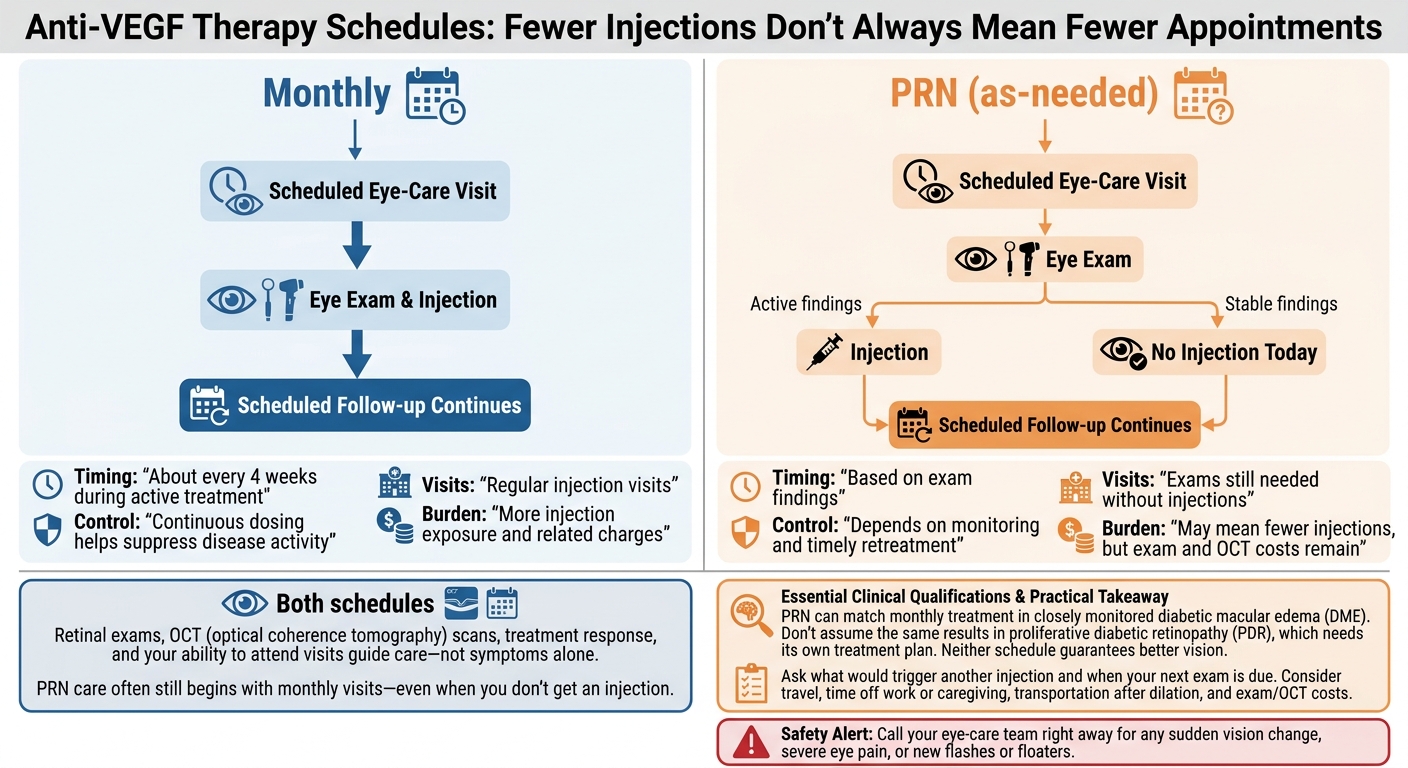
Monthly vs. PRN Anti-VEGF Therapy
How Each Treatment Schedule Works
Monthly Injections for Active Disease
Monthly injections help keep active disease under steady control, especially early in treatment. Each monthly visit centers on the injection. Retinal exams and optical coherence tomography (OCT) track how the eye responds and help guide changes to the schedule.
These checks help your ophthalmologist decide whether to continue monthly treatment or switch to PRN-style follow-up.
Scheduled Monitoring With PRN Treatment
PRN, or as-needed, care often still begins with monthly visits – even when you don’t get an injection. These visits may include vision testing, a dilated retinal exam, and OCT when swelling needs a closer look.
Exam findings guide whether you need an injection. Swelling that threatens vision or fragile new blood vessels may call for treatment. If findings are stable, you may not need an injection that day. A limited response to injections calls for reassessment.
These schedule differences affect disease control, the number of injections, and time spent at follow-up visits.
sbb-itb-929a4e2
Intravitreal Injection Dosing Regimens
Monthly vs. PRN: Disease Control and Treatment Burden
The main tradeoff is steadier disease suppression versus fewer injections.
| Factor | Monthly | PRN |
|---|---|---|
| Recurrence | Continuous dosing helps suppress disease activity | Recurrence may go undetected without strict monitoring |
| Appointment burden | Regular injection visits | Monitoring visits are still needed, even without injections |
| Flexibility | Fixed injection schedule | Injections depend on current retinal findings |
This matters most when disease can return before you notice symptoms.
Disease Control and Recurrence
Monthly dosing keeps VEGF suppression steadier during active disease. PRN can match monthly treatment in closely monitored diabetic macular edema (DME), but missed visits can allow fluid to return before symptoms appear. Don’t assume the same results in proliferative diabetic retinopathy (PDR). Fluid and neovascular activity – abnormal blood vessel growth – can return before noticeable vision loss. Neither schedule guarantees better vision.
Injection Risks and Follow-Up Exams
Each injection carries a small risk of infection, inflammation, increased eye pressure, and retinal detachment. PRN means fewer injections, not less follow-up. The goal is to skip injections you don’t need without missing active disease. Contact your ophthalmologist immediately if you notice new flashes, a sudden increase in floaters, sudden blurred vision, or a curtain over your vision.
Treatment also takes time, travel, and money.
Time, Travel, and Out-of-Pocket Costs
Fewer injections don’t mean fewer visits. Plan for travel, time off work or caregiving, and safe transportation after dilation.
If both eyes need treatment, ask how visits will be coordinated. Ask Denver Eye Surgeons for estimated medication, injection, OCT, and exam charges, and confirm copays with your insurer.
How Your Ophthalmologist Chooses a Schedule
Your ophthalmologist reviews your starting vision, whether swelling affects the macula’s center, retinal thickness and fluid on optical coherence tomography (OCT), and how you respond to injections. Your blood sugar, blood pressure, and ability to attend follow-up visits also help shape the plan. These findings guide whether treatment stays monthly, shifts to as-needed treatment (PRN), or changes again after follow-up.
How Retinal Findings Guide Treatment
Active or worsening edema may call for monthly treatment or similarly close intervals. Stable retinal findings may allow PRN retreatment, though returning fluid may still require injections. Ask which changes in your vision or OCT results would mean it’s time for another treatment.
If you also have proliferative diabetic retinopathy (PDR), you need a separate plan to address abnormal blood vessel growth. This may include injections and laser treatment. How you respond helps determine when your next injections are scheduled.
Changing Frequency After Initial Injections
Many DME treatment plans start with closely spaced injections. After that, the schedule changes based on the medication and your response. A PRN visit may end without an injection.
Follow-Up Plans and Urgent Symptoms
Confirm your next exam date and what findings would call for retreatment. Tell the office if anything makes it hard to attend follow-up visits, and contact them promptly to reschedule a missed appointment. Call your eye-care team right away for any sudden vision change, severe eye pain, or new flashes or floaters.
Conclusion: Match the Schedule to Your Retinal Findings
Your treatment schedule depends on how much disease control your retina needs right now. Monthly anti-VEGF treatment provides consistent dosing. PRN, or as-needed treatment, may mean fewer injections for some patients, but it still requires close retinal follow-up. Your eye exam and OCT results – not symptoms alone – guide that decision.
To plan your follow-up care, request a consultation at Denver Eye Surgeons. Your plan should reflect your retinal findings and follow-up needs.
FAQs
How long must my retina stay stable before switching to PRN?
The timing depends on how you respond to treatment and your retina specialist’s assessment at Denver Eye Surgeons. Your specialist will check for signs that your retina is stable, including fluid clearing and no new abnormal blood vessel growth.
Keep your regular follow-up appointments. These visits help your specialist decide when your retina is stable enough to safely move from monthly injections to as-needed (PRN) monitoring and treatment.
What if fluid keeps returning between PRN visits?
If fluid keeps building up despite anti-VEGF injections, your ophthalmologist may adjust your treatment plan. This usually means switching medications or adding laser therapy to help control fluid leakage. At Denver Eye Surgeons, your doctor will review how you’ve responded to past treatments to choose the best approach for your needs.
Can each eye follow a different injection schedule?
Yes, each eye can follow a different anti-VEGF injection schedule. Your specialist at Denver Eye Surgeons will set each eye’s schedule based on its condition, disease severity, and overall health to meet your medical needs.