
- PRK Prep Is the Same as LASIK Prep
PRK and LASIK require different preparation steps. PRK involves removing the cornea’s outer layer, so recovery and medication plans differ. For example, PRK demands longer steroid drop use and more time off work compared to LASIK. - You Can Keep Wearing Contact Lenses Before PRK
Contact lenses reshape your cornea, affecting pre-op measurements. You’ll need to stop wearing them for 3–7 days (soft lenses) or longer for rigid lenses to ensure accurate corneal mapping. - No Health or Lifestyle Changes Are Needed
Medications, health conditions, and habits like smoking or alcohol consumption can interfere with healing. Adjustments like stopping antihistamines or using prescribed antibiotic eye drops are necessary. - You Don’t Need Time Off or Help After PRK
Recovery takes several days, unlike LASIK. Expect blurred vision, light sensitivity, and the need for assistance with daily tasks for at least 3–5 days. - Diet and Skincare Don’t Matter Before Surgery
Avoid alcohol, heavy meals, and skincare products like makeup or moisturizers before surgery. These steps reduce infection risks and support healing.
Key Takeaway: PRK preparation is specific and tailored to your needs. Follow your surgeon’s guidance to ensure smooth surgery and recovery.
Preparing for PRK Refractive Surgery
sbb-itb-929a4e2
1. PRK Prep Is the Same as LASIK Prep
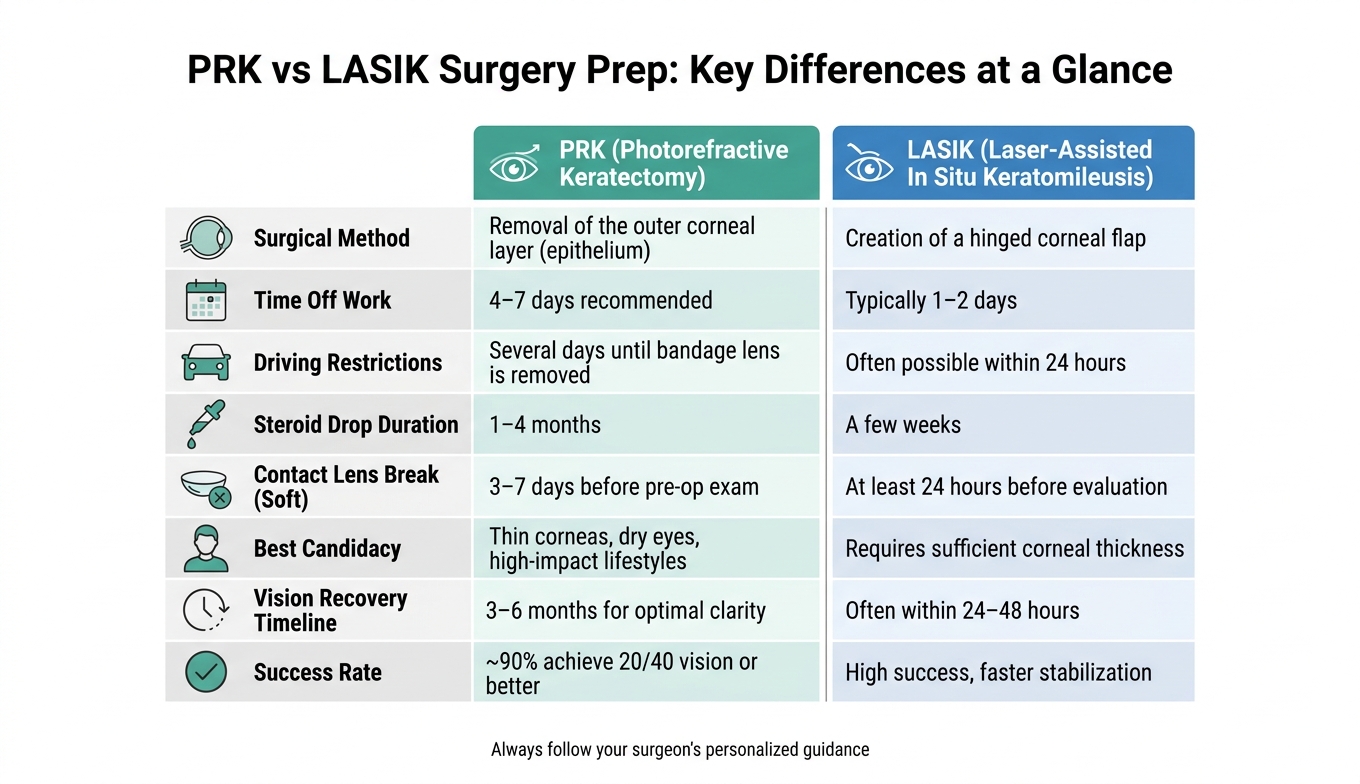
PRK vs LASIK Surgery Prep: Key Differences at a Glance
While PRK and LASIK share the goal of improving vision, their preparation processes differ significantly. LASIK involves creating a hinged corneal flap, whereas PRK removes the epithelium, which naturally regenerates within 3–5 days. These procedural differences influence both patient eligibility and how one prepares for the surgery.
PRK is often suggested for those with thin or irregular corneas or dry eyes – factors that might rule out LASIK. If you’re considering PRK, it’s crucial to ensure your cornea has fully healed before your evaluation. This helps achieve precise measurements:
"If your cornea has not returned to its natural form before your evaluation, it can lead to inaccurate measurements and less precise results."
Another key distinction is the longer steroid drop regimen required after PRK, which can last 1–4 months. Patients are also advised to pick up these prescriptions in advance.
Here’s a breakdown of the main preparation differences between PRK and LASIK:
| Feature | PRK (Photorefractive Keratectomy) | LASIK (Laser-Assisted In Situ Keratomileusis) |
|---|---|---|
| Surgical Method | Removal of the epithelium | Creation of a hinged corneal flap |
| Time Off Work | 4–7 days recommended | Typically 1–2 days |
| Driving Restrictions | Several days until the bandage lens is removed | Often possible within 24 hours |
| Steroid Drop Duration | 1–4 months | A few weeks |
| Candidacy | Ideal for patients with thin corneas, dry eyes, or high-impact lifestyles | Requires sufficient corneal thickness |
These differences highlight the importance of tailoring the procedure to your individual needs and lifestyle.
2. You Can Keep Wearing Contact Lenses Before PRK
One common belief about PRK preparation is that you can continue wearing contact lenses right up until the surgery. But this isn’t true. Contact lenses can reshape your cornea over time, which impacts the accuracy of preoperative measurements and might affect the results of your vision correction.
Corneal topography – used to create a detailed 3D map of your cornea – can be thrown off by the temporary changes caused by contact lenses. This can lead to a less precise treatment plan.
A study involving 19,747 eyes found that patients who removed their soft contact lenses less than 24 hours before surgery had lower success rates compared to those who waited longer. Researcher Raneen Shehadeh-Mashor explained:
"Soft contact lenses should be removed at least 24 h prior to final preoperative evaluation and refractive surgery, especially for patients undergoing PRK."
The amount of time you need to stop wearing lenses depends on the type of contacts you use:
- Soft lenses: A break of 3–7 days before your pre-op exam is typically recommended.
- Soft toric or extended wear lenses: You may need to stop wearing them for 1–2 weeks.
- Rigid Gas Permeable (RGP) lenses: These require at least 3–4 weeks off, as they reshape the cornea more significantly.
- Hard (PMMA) lenses: These often require a break of 4 weeks or more.
To ensure precise measurements, it’s crucial to follow the break period your surgeon advises. If your cornea hasn’t returned to its natural shape by your pre-op exam, your surgeon might delay the procedure until it stabilizes. Switching to glasses well in advance can help your surgeon get an accurate corneal profile, which is essential for creating the best surgical plan. Sticking to these guidelines ensures your corneal scan reflects its natural shape, setting you up for the best possible results.
3. No Medication, Health, or Lifestyle Changes Are Needed Before PRK
It’s easy to think you can just walk into PRK surgery without adjusting your routine, but the truth is, your health, medications, and daily habits can play a big role in how well your eyes recover. Let’s break down why these factors matter, starting with medications.
Medications can impact your recovery. Some drugs or supplements might interfere with corneal healing or react poorly with the numbing drops and mild sedatives used during the procedure. For instance, antihistamines should be discontinued 72 hours before surgery. To prepare, your surgeon might prescribe antibiotic eye drops – such as Zymaxid – to be used three to four days prior to the procedure to reduce the risk of infection. Make sure to fill these prescriptions ahead of time.
Your overall health is equally important. Conditions like lupus, rheumatoid arthritis, uncontrolled diabetes, or a history of ocular herpes can affect the safety and recovery process of PRK surgery. It’s crucial to share your full medical history with your surgeon so they can tailor the safest approach for you.
Lifestyle choices also come into play. Avoid alcohol and smoking for at least 24 hours before surgery. These habits can dehydrate your body and slow down the healing process, which is critical for the success of PRK. If you catch a cold or flu before your surgery date, notify the surgical center immediately so they can reschedule.
"Following your PRK procedure, it’s essential to get plenty of rest and take any prescribed medications as directed by your eye surgeon." – Eye Surgery Guide
Taking the time to prepare properly can make a world of difference for your recovery.
4. You Do Not Need Time Off or Help After PRK
This misconception often surprises people. Unlike LASIK – where many patients are back to work within a couple of days – PRK requires a longer recovery period. Since PRK involves removing the outer layer of the cornea, your body needs time to regenerate it. You should plan to take 3 to 5 days off and arrange for assistance with transportation and daily tasks during the early recovery phase.
"You essentially have an open wound on your eye that your body is working to heal." – Jason Marcellus, OD, Cleveland Clinic
During the first 48 to 72 hours, you’ll likely need to avoid bright light to reduce discomfort from light sensitivity. A week after the procedure, your vision might still be around 20/50 or 20/60 – functional but not fully clear. Achieving optimal clarity can take anywhere from three to six months.
Having practical help is essential during this time. You’ll need someone to drive you home on the day of surgery, and night driving is usually not recommended for about a week as your vision stabilizes. Everyday tasks like cooking or reading may feel challenging due to blurred vision and sensitivity to light.
To make recovery easier, think ahead. Stock up on simple, no-cook finger foods, set up a comfortable recovery area with blackout curtains, and activate voice assistants on your devices to minimize eye strain. Audiobooks and podcasts can be great alternatives to screen-based entertainment during those first few days.
While the recovery process can be inconvenient, the results are worth it. Around 90% of PRK patients achieve 20/40 vision or better without needing glasses or contacts. Taking these steps ensures a smoother recovery and highlights the importance of planning ahead after PRK.
5. What You Eat, Drink, and Put on Your Face Before PRK Does Not Matter
It’s easy to assume that your usual morning habits – like drinking coffee or applying moisturizer – won’t affect your PRK results. But in reality, what you eat, drink, and even wear can make a difference in your preparation and recovery.
Your diet plays a role. A light, balanced meal is the way to go before surgery. Avoid heavy, greasy, or spicy foods, as they can cause nausea. Alcohol is another no-go; it dehydrates your body and can slow down the healing process. For the same reason, smoking should be avoided both the day before and the day of your procedure.
"Alcohol and smoking can dehydrate your body and slow healing." – Carrot LASIK & Eye Center
Hydration is also key. Staying well-hydrated helps your corneas heal properly and reduces the chance of dry eye symptoms after surgery. This highlights how even small adjustments in your routine can make a big difference.
When it comes to skincare and personal products, stop using eye makeup, moisturizers, perfumes, nail polish, and deodorants at least three days before surgery. These items can interfere with the sterile environment needed for the procedure and increase the risk of infection. On surgery day, take a shower and wash your hair to help keep your eyes dry afterward. Arriving with a completely clean face is non-negotiable.
Don’t forget about accessories, either. Remove bulky hair items that might get in the way of proper head positioning during the laser treatment. Some providers even recommend cutting back on caffeine that morning to help you stay calm. These simple steps are designed to ensure the laser operates with precision and to set you up for a smooth recovery. It turns out, every detail – what you eat, drink, and wear – matters more than you might think.
Conclusion
Preparing for PRK surgery is often misunderstood, and these misconceptions can lead to unnecessary complications. Unlike LASIK, PRK requires specific preparation – whether it’s stopping contact lens use, adjusting medications, or planning for recovery time. Each step is carefully designed to suit the individual patient.
The key takeaway from the five myths is this: PRK is a highly precise procedure that thrives on a personalized approach. Everything, from corneal mapping to post-op care, is customized to fit your eyes, medical history, and lifestyle. As highlighted by the team at Denver Eye Surgeons:
"Sometimes PRK is a better option than LASIK for a patient if the cornea is too thin or irregularly shaped where flap creation may be relatively unsafe."
This individualized assessment – factoring in corneal thickness, prescription stability, and overall eye health – is what ensures a smooth recovery and helps avoid complications. Patients at Denver Eye Surgeons often praise the staff for being "helpful and informative" throughout the process.
Because PRK preparation is so specific to each individual, expert guidance is crucial. If you’re considering PRK, scheduling a consultation with a qualified specialist is the best way to start. Myths may create doubt, but understanding the facts will help safeguard your vision.
FAQs
How far in advance should I schedule my PRK consultation?
Scheduling your PRK consultation promptly is a smart move once you decide to move forward with the surgery. This allows the specialists at Denver Eye Surgeons to thoroughly review your medical history, conduct essential diagnostic tests like corneal mapping, and provide detailed pre-operative instructions. Booking early also gives you plenty of time to address any questions and ensures you’re well-prepared for a smooth procedure and recovery process.
What should I do if I get sick right before PRK?
If you’re feeling under the weather on the day of your PRK surgery, it’s important to reach out to your surgeon right away. Being in good health is essential for any surgical procedure. The team at Denver Eye Surgeons will evaluate your symptoms and determine if rescheduling is the best option to ensure the procedure goes smoothly. Always share any health concerns with your care team ahead of your appointment so they can provide the right advice.
When can I safely drive again after PRK?
You’ll need someone to take you home after your PRK procedure. Most people can start driving again about a week later, once their vision has settled. Since your eyesight might change during the healing process, only get behind the wheel after your ophthalmologist confirms that you meet the required vision standards. Always stick to your surgeon’s guidance on when it’s safe to driv